

Written by Gabriel Dionio and Marianne Pagaduan
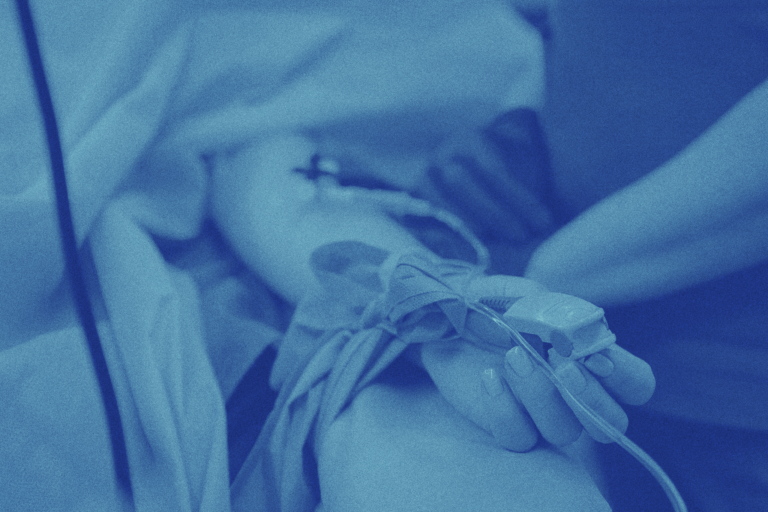
Access to healthcare is a fundamental right, yet Deaf individuals in the Philippines continue to face significant barriers when seeking medical attention. Despite the enactment of Republic Act No. 11106, or the Filipino Sign Language (FSL) Law, many hospitals remain unprepared to accommodate Deaf patients properly. A lot of their issues stem from difficulties in communication and the need for a family member on their behalf, being put in the same box as PWDs, and in some cases, discrimination. Despite hospitals doing their best to cater to the majority of patients, the Deaf may still feel uncomfortable about receiving medical care from hospitals and health centers as they feel as though they’re not being properly heard from by these hospitals. This article explores the real-life challenges faced by Deaf individuals in hospitals based on interviews with Deaf patients in Metro Manila.
Deaf patients often rely on companions who know Filipino Sign Language (FSL), such as family members, friends, or personal interpreters, to communicate with medical staff. These companions act as a bridge between the Deaf patient and healthcare professionals. The Deaf rely on their family members as a lifeline, and as their interpreter to properly understand what the doctor tells them, but even then, there’s a layer of difficulty in constantly relying on their family member.
Even when accompanied by family members, while alleviating some of the issues of communication, barriers do still persist. Some companions do not relay information accurately or fail to explain medical procedures in full detail. There is a level of difficulty with actively trying to translate complex names of conditions when an FSL equivalent for the word doesn’t even exist. Some words get lost in translation, and the same problem occurs when any particularly deep English or Filipino words are used in conversation, which may also be difficult to properly convey using FSL. Even still, some have expressed that their hospital experience can sometimes be stressful and time consuming without someone who can understand FSL. Communication from the deaf people directly to medical professionals through text, either through pen and paper, or cellphones, which is far from enough.
In some cases, if a family member isn’t present, the deaf may even face discrimination. This has occurred during instances where a hospital staff may unable to communicate with a Deaf patient, leading to situations like this, as a deaf patient who would like to remain anonymous has this to say:
“So minsan kasi may narexperience siya na nadescriminate siya ng doctor pero hindi naman lahat. May times na narexperience niya na parang nabastos siya, nadescriminate. Minsan tinatanong siya na “Wala kang kasama?” Ganun yun daw naramdaman niya. So minsan pag alam na wala siyang kasama minsan nawawala yung pokus sa kanya.”
Treatment may also differs when the Deaf community is put in the same category as PWDs
The Philippines classifies the Deaf community under the broader category of Persons with Disabilities (PWD). While this provides certain benefits and discounts, this also adds on to the misconception that those who are deaf are also disabled or disadvantaged, but this is not a label that is correct. This unfortunately adds to the stereotype that the deaf are just another group of people under PWD, and not their own separate community. This is especially true when it comes to treatment, as the deaf, while given PWD rights, some have expressed there are laws on PWD rights instead of Deaf rights, and the Deaf are being treated in the same vein as those who are PWDs. If you didn’t catch that, this means treatments for the Deaf aren’t any different for PWDs, when the Deaf have different needs from PWDs that aren’t properly addressed.
Hospitals themselves also face a challenge when it comes to treating patients they can’t properly communicate with.
One of the most critical barriers to accessible healthcare for the Deaf is the lack of professional interpreters in hospitals. While the FSL Law mandates the promotion of FSL in public services, most hospitals, if not all hospitals in Manila do not employ interpreters, leaving Deaf patients to their family members as their closest alternative to an interpreter, with doctors even expecting most Deaf patients to be naturally accompanied by a family member who knows FSL, and even then, from the perspective of the medical professionals, Deaf patients are quite uncommon.
In absence of interpreters or proper FSL training, medical staff usually have to resort to written communication, a language sheet for yes or no questions, or visual graphs that measure how much pain the patient is feeling if they want a more direct or immediate form of treatment. While this may work for basic exchanges, it is not an effective solution for complex medical discussions. Additionally, written communication is unreliable especially when going back to the usage of deep English or Filipino words.
Part of this is because the FSL Act is generally not well-known even amongst hospitals.
A major finding of the related study is that many hospital staff are unaware of Republic Act No. 11106 and the rights it grants to the Deaf community. The law still requires much improvement in its implementation, especially as the majority of communication with the Deaf is done through written or other forms of communication and not FSL, which is what the Deaf people are most comfortable with using. While there are those who are aware of the law, more often than not, they are not completely familiar with the full contents of it. The lack of government support in its implementation leaves Deaf patients without the support they are legally entitled to receive.
This article is based on the research “A Phenomenological Study on the Use of Filipino Sign Language (FSL) pursuant to Republic Act No. 11106 in Medical Institutions in Metro Manila,” where researchers interviewed six Deaf individuals about their experiences during hospital visits in Metro Manila. Their testimonies highlight the glaring lack of implementation of the law in the healthcare system.